
Multi-blade Saw
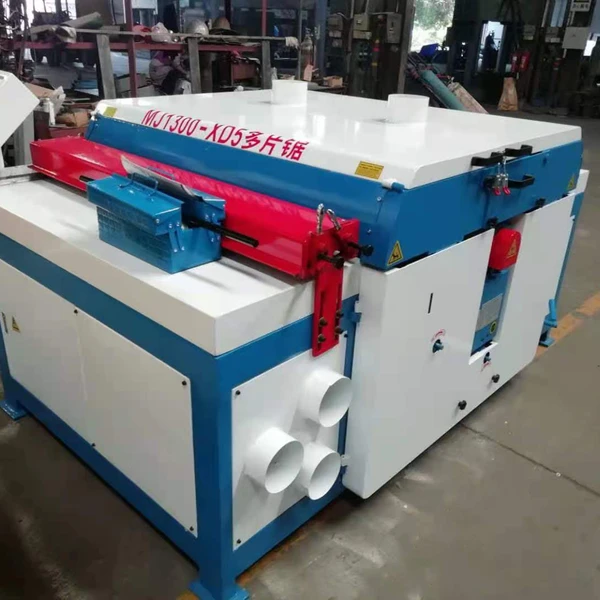
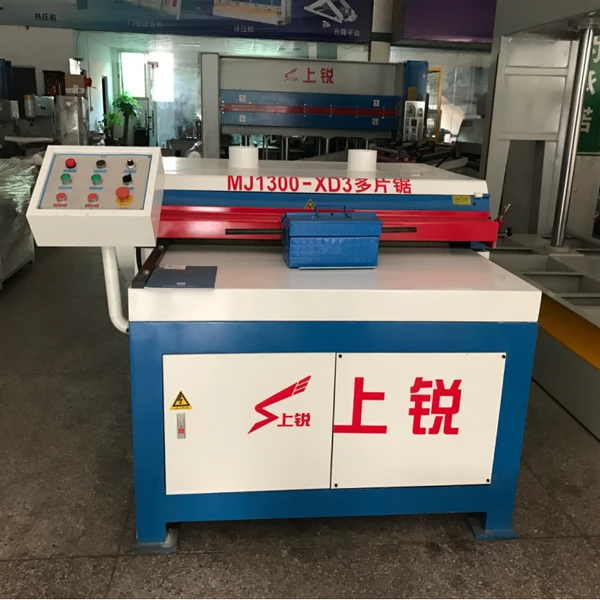
Multiple blade cutting in one pass for high efficiency. Suitable for solid wood and panel longitudinal cutting.
The core of a multi-blade saw is multiple blades mounted on one arbor: one feed cuts several strips at once, replacing the repeated clamping of a single-blade saw. Logs and squares come out as equal-width strips in a single pass; strip width and thickness are set by blade spacing and spacers. It is the key station for solid-wood breakdown and panel ripping lines.
Choosing a multi-blade saw comes down to three numbers: maximum cutting thickness, minimum workpiece length and arbor diameter. The MJ1300 series cuts 5–50mm thick with a 650mm minimum length, in both panel and square-timber versions. Blade count, upper/lower arbor configuration and infeed/outfeed tables are all configured to your ripping specs, so one pass yields finished strips.
Key Features
- One feed cuts multiple equal-width strips — several times faster than a single-blade saw
- Cutting thickness 5–50mm, with panel and square-timber models available
- Rigid arbor and precise blade positioning for smooth cuts with minimal wander
- Infeed/outfeed roller tables support feeding for continuous ripping of long stock
- Forms a breakdown station with loading tables and links into automated line feeding
Please Provide the Following for Quotation
- What you rip (logs / squares / panels) and the size range
- Required strip width and thickness
- Daily ripping volume and shift arrangement
- Blade count and diameter preference (or existing blade stock)
- Power supply and dust extraction setup
FAQ
How many strips per pass? How is width adjusted?
Strip count depends on arbor length and blade diameter — as many strips as blades fitted, commonly 4 to 10 or more. Each strip width is set by the spacer thickness between adjacent blades; changing spacers changes the width combination. Send us your finished-strip width list and we will configure the blade set and spacers so the machine rips to your spec on day one.
What is the difference between a panel multi-blade saw and a log multi-blade saw?
A panel multi-blade saw processes boards and squares that are already sawn — its job is ripping with precision and clean cut faces. A log multi-blade saw has upper/lower arbors or guides to process round logs directly, milling a reference face before ripping. We make both: choose by whether your upstream material is sawn stock or logs, or pair the two as a log-first, panel-after setup.
How much do blades wear? How often do they need changing?
Blade life depends mostly on material hardness and grit content. For normal solid-wood ripping, carbide-tipped blades typically run tens to over a hundred hours between re-sharpenings; gritty species like eucalyptus shorten that noticeably. We recommend keeping two blade sets in rotation. Machines come with carbide blades fitted, we supply common spare specs, and the sharpening cycle and consumables plan are included in the handover documentation.
Can it form an automatic ripping line with loading equipment?
Yes. Pair the saw with a lifting infeed table and outfeed roller table, then add sorting conveyors, and you have a continuous ripping line; it can also link to edge-trimming and crosscut saws. Send us your incoming material form and floor dimensions, and we will deliver a layout drawing and configuration list for the ripping station.