
Splicing Machine
Efficient splicing equipment for wood board splicing with strong and flat joints.
The splicing machine solves the problem of rotary-cut core panels and veneer coming in uneven lengths and widths. It automatically detects, edge-trims, glues, splices, cuts to length and stacks, turning loose short strips into full-size sheets — directly replacing manual laying. For factories making eco-boards and plywood cores, this process decides both yield and labor cost.
Two specs decide the choice: the thickness range it can splice and the full-sheet format. The MH1325 has a 3200×1300mm table with a 400mm working stroke, splicing core panels, veneer and eco-board cores; splice width and thickness range are customized to your material list, with dedicated models for veneer down to a fraction of a millimeter.
Key Features
- Automatic detecting, trimming, gluing, splicing, cutting and stacking in one flow — replacing manual laying
- Uneven short strips are spliced into full sheets, markedly improving yield
- Splices are flat and strong, with joint strength close to solid sheet
- Handles core panels, veneer and eco-board cores; thickness range customized to your list
- Adjustable splicing speed; links with drying and sanding lines into a core-preparation section
_up_001.webp)
MH1325
Splicing Machine
View Details →_up_001.webp)
MH1325
Splicing Machine
View Details →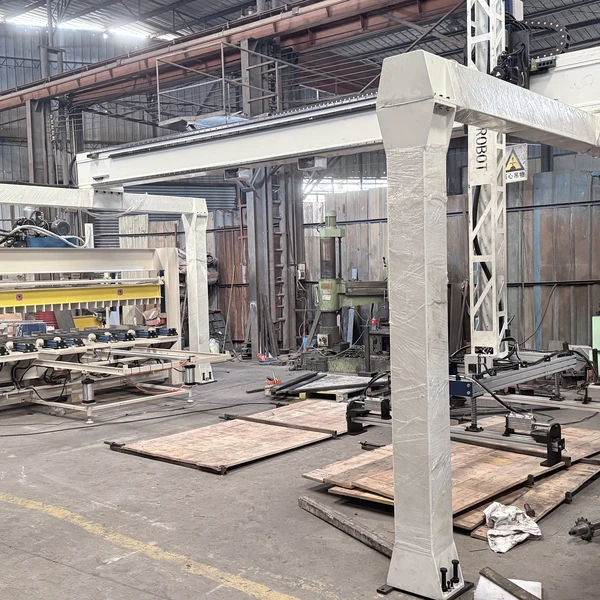
MH1325
Splicing Machine
View Details →Please Provide the Following for Quotation
- What you splice (core panels / veneer / eco-board cores) and thickness range
- Incoming material sizes (length and width range) and target full-sheet format
- Daily full-sheet output and required splicing speed
- Glue type (urea / PVA etc.) and glue spread requirement
- Whether a drying line is needed, stacking direction and site layout
FAQ
How short can the pieces be? How thin a veneer can it splice?
Incoming pieces as short as a few tens of centimeters feed and splice automatically; the exact lower limit depends on width — very short and narrow scraps should be sorted first. Veneer down to a fraction of a millimeter can be handled, but very thin veneer demands more from tensioning and conveying, so we match the model to your veneer thickness range rather than running thin skins on a thick-panel machine.
Are the joints visible? Do they affect later facing?
With straight trim cuts, even gluing and stable splice pressure, the surface at the joint is essentially flush; after sanding the surface uniformity approaches a solid core sheet. Later melamine or veneer facing is not affected — joint flatness is an acceptance item at delivery, and during commissioning we run trial splices against your facing process.
Compared with manual laying, how much labor can it save in a year?
A manual core-laying line typically takes 4-6 workers; a splicing line needs only 1-2 operators watching the machine, and at a steadier pace. On a two-shift basis, annual labor savings are usually in the tens of thousands of RMB; the material savings from higher yield depend on your scrap ratio. Send us your daily output and current laying headcount, and we will work out a concrete comparison.
Can it link with drying and hot pressing?
Yes — this is the standard core-preparation combination: splicer outputs full sheets, then drying/air curing, then hot pressing into board. Splicing speed is adjustable to match the drying line's rhythm, and the whole section runs continuously. Give us your line capacity target and we will size the splicer and pace the whole layout together.